Review: Smorgasbord of Indonesian specialities at Hujan Locale

Hujan  Locale in Ubud is the latest offering in Australian chef and entrepreneur Will Meryck’s “chain” of contemporary Asian restaurants in Bali, including Sarong and Mama San in Seminyak.

Tucked away in Jalan Sri Wedari, off the main street – Jalan Raya Ubud, the atmosphere is reminiscent of a Singapore ore Vietnam colonial interior, featuring a mix of wood, bamboo, tiles and even a chandelier.

The warm, inviting interior is filled with diners the night we visit. Bookings are highly advisable. We asked for a table upstairs which gets the through breeze and views over the street to one side and a Balinese family compound on the other.

The menu features a diversity of dishes inspired by the various regions of the Indonesian archipelago with most ingredients supplied by local farmers. It is a smorgasbord of Indonesian delights and uncompromising in it’s inclusion of chilli and spices, so would not recommend if you don’t like spicy food.

We choose the Pig Ear’s served with sambal spiced aioli and a crackling and the Gorengan or “fried platter” to start with. Admittedly, this was probably a wrong combination as both dishes feature deep frying but the tomato chilli sambal, lemon, green chillies and aioli provide fresh,spicy flavours.

image
Crispy Pig’s Ears with crackling and sambal aioli

Our favourites were the corn fritters and fried tempeh with bites of fresh green chilli in-between which is as the locals do! The serving size of the starters is very generous and the Gorengan Platter which also features delicious lumpiah (Spring rolls) and average curry puffs could be further refined for a smaller and more focussed offering. I found the Pig’s Ears interesting but rather chewy and flavourless on their own but okay dipped in the aioli.

image
Gorengan platter with fresh green chillies and tomato chilli sambal

The mains we ordered, on the other hand, were really delicious! We had the Kari Kambing Aceh – slow cooked Sumatran Lamb Curry (with Australian lamb) with roti canai, the Karangasem Sambal Udang – prawn sambal and Pelecing Kunkung – stir fried water spinach.

The lamb cooked in a rich sauce with star anise, cardamom and  curry leaves was “melt in your mouth” perfect. The roti canai was not of the soft, fluffy variety that we are accustomed to but crispy, still providing a good medium to dip into the curry sauce.

The prawns are cooked with the heads off but shells and tails still on. The shells come off easily and are delicious to chew on, the prawns themselves are perfectly cooked, tender and sweet cooked protected in their shells but still redolent of the spicy sambal sauce.

The Pelecing Kankung, stir fried water spinach features spicy chilli and hints of sambal belacan(shrimp paste) with roasted peanuts scattered on top, is a perfect green accompaniment to the other two dishes.

The overall experience of Hujan Locale was very pleasant and a good way to get a sense of the smorgasbord of tastes available in Indonesian regional specialities. Once again we were too full to try the desserts.

2015 in review

Here’s the completed “Year in Review” post!

Happy New Year!! As we start the new year I thought I’d reflect on the first six months of my Free Spirit Food blog. It’s certainly been very interesting starting this blogging journey and I was amazed to receive my “annual report” from WordPress telling me that there had been almost 5,000 views since June 2015 – apparently almost the equivalent of four full New York subway trains!

My aim when I started was to get to 100 followers by the end of the year and as we enter the new year I would like to say thank you to the 105 people who find my recipes and reviews of interest. Some of you are friends and family, but the majority of you are from around Australia and the world with very informative, interesting and beautiful blogs of your own.

I wanted to say a special thank you to my most loyal supporters and give their great blogs a plug:

From the family table
What’s Bec Cooking
My little space in the sun
Delights of the Algarve
Arpita’s Travelogue

I also thought you might be interested in the top 5 most popular posts from Free Spirit Food in 2015.

  1. Roasted eggplant with cummin and yoghurt
Roasted eggplant
Roasted eggplant with cummin and yoghurt

2. Pulled pork with garlic, thyme and chilli

Pulled pork

3. Lamb and potato curry

Lamb and potato curry with rice and red lentil dhal

4.Durban style mince and pea samosas with spring roll pastry

Durban-style mince and pea Samosas
Durban-style mince and pea samosas with spring roll pastry

5.Review: Pau Sat: Satay Street in Singapore

Lau pa Sat Market Building
Beautiful colonial architecture of Lau Pa Sat hawker centre, originally a wet market

And that’s the wrap of 2015!

Looking forward to another year of great foodie and travel adventures which began with an amazing seven course meal at Mozaic restaurant in Ubud last night.

Bali Review: A real Babi Guling experience at Warung Ibu Suna, Kedewatan

image
Campuhan Bridge from the river’s edge

Having set out at 7.30am to do the Campuhan Ridge walk in Ubud before the sun got too hot, we decided we would have breakfast/brunch on the way back to Penestanan. The walk starts from stairs near the Campuhan Bridge that take you down to the river bed where you negotiate crossing over rocks to more stairs that lead up to the impressive temple on the other side, and the actual start of the “trek” up the ridge.

We were lucky to have the aid of a makeshift bamboo “bridge” to get us across. The walk itself up the ridge affords stunning views across valleys on both sides.

After about 3km of rolling hill climbs, you reach the village of Tegallalang with it’s rice fields and then walk another 4kms or so through the village of Kedawatan towards Jalan Sangiangan, the main route into Ubud. This stretch involves very steep hill walks between Tegallalang and Kedwatan and we certainly worked up a sweat and an appetite!

Just as we leaving Kedawatan heading towards Ubud, we noticed a spotless Warung with a freshly delivered Babi Guling pig being chopped up for the day’s servings. We couldn’t resist knowing that most local warungs only serve Babi Guling fresh in the mornings and run out by midday. We were also keen to sample Babi Guling outside the now-world famous and tourist focussed Ibu Oka in Ubud central.

Having been to Ibu Oka many times in the last decade, from it’s original dirt floor premises opposite the Ubud Palace, to the now massive hall-like venue occupied by Ibu Oka 2, the sight of the small and spotlessly clean, local Warung Ibu Suna with locals tucking in, was very appealing. So, in we went and we were not to be disappointed.

The Babi Guling was served with rice, hot chilli sambal, a delicious spicy lawar (mixture of green ferns and finely chopped green/snake beans and porky bits, juicy pieces of pork, crispy innard bits and brilliantly crispy, “glassy” crackling. The soup accompanying the Babi Guling was one of the best we have ever tried and included pork pieces on the bone, cooked in the soup to a melt in your mouth texture. All this, and a bottle of Rasa Temulawak Beruap (see below for info)for only IR65,000 for the 2 of us!

Rasa Temulawak Beruap - sweet and gingery drink at Warung Ibu Suna
Rasa Temulawak Beruap – sweet and gingery drink at Warung Ibu Suna

Literally translated Rasa Temulawak Beruap means “ginger flavour steamy”, but tastewise it’s like a sharper, richer flavoured non-alcoholic ginger beer. According to an article in the Jakarta Post, Temulawak is Javanese turmeric which has excellent cholesterol reducing properties, even better than turmeric. We of course didn’t know all this at the time but the spicy sweetness of the icy cold drink certainly went very well with our Babi Guling. Here’s the link to The Jakarta Post article:
http://m.thejakartapost.com/news/2009/11/25/‘temulawak’-another-wonder-healer.html

There are no menu choices here but they definitley do their speciality very well.

I have googled to find other reviews of Warung Ibu Suna and cannot find any mentions on Trip advisor or anywhere. I doubt very much that we are the first tourists to visit and enjoy Ibu Suna’s hospitality and delicious Babi Guling but I suspect they might not have wanted to share this very tasty secret with the world just as yet.

Ps. We then walked the rest of the 3.5km back to Penestanan energised by our power breakfast/brunch!

Javanese dining in Ubud – Warung Mendez Penestanan

image
Display of spices at Warung Mendez

After a wonderful Christmas eating lots of delicious traditional English and Australian food, we are now in Bali for a fortnight of feasting and relaxation up in the hills of Ubud. There won’t be too much cooking but certainly a lot of eating planned.

We have been regulars to Bali over the last ten years and can’t help but feel instantly relaxed when we get here through the combination of the warm Balinese hospitality, heat of the tropical sun and diversity and quality of the food.

This visit we are staying in the village of Penestanan on the edge of the rice fields, once quite a sleepy part of Ubud but which has now been populated with great cafes and restaurants, spas and villas.

We started our first day here lazing by our pool before choosing to lunch at Warung Mendez, a restaurant specialising in Javanese cuisine. From tempting appetisers and soups to specials such as slow cooked goat’s leg and Tempe fried in a special spring onion batter, deciding on what to eat is not an easy task so we immediately ordered Bintang beer to cool us down as we made the tough choices.

Adrian often talks about Rawon soup which he had previously enjoyed in Jakarta. The dark almost black, beef soup is made that colour and given it’s unique earthy flavour from the use of the kelucak seed. It is traditionally served with steamed rice and chilli sambal, which is known as Nasi Rawon. At Warung Mendez, we ordered it just as a soup to shar alongside our individual mains of Nasi Goreng and Rica Rica Mackerel.

Rawon black beef soup at Warung Mendez

Whilst the Rawon soup was delicious, it felt like it had been “toned down” to suit the largely tourist palate of the diners that frequent the restaurant. However the nutty taste of the ground kelucak seeds did shine through and with the addition of some of the tasty homemade chilli sambal we had certainly would get Warung Mendez at least 3.5 stars for their version.

Of course it is difficult to pass by a Nasi Goreng or the Balinese version known as Nasi Campur when in Bali. The Warung Mendez version comes with the traditional fried rice, freshly bed chicken satays, pickled carrot, crispy shredded cabbage, a perfectly fried egg and prawn crackers. Adrian’s verdict is that it was “very nice”. We could see, smell and hear the rice being wok tossed and the stays being barbecued!

My Rica Rica Mackerel was not quite as I expected having had the more “tomatoey” Chicken Rica-Rica before. The Warung Mendez Mackerel version omits the tomatoes but features delicious grilled and then shredded fish mixed with the spicy chilli and shallot Rica Rica spice paste. The inclusion of small pieces of tangy Balines lime and the accompaniments of the fern and coconut salad and turmeric rice made for a light and tasty lunch dish.

Rica Rica mackerel at Warung Mendez

All in all we would recommend Warung Mendez if you’d like to get an authentic taste of Javanese food in Ubud at an extremely good price. Our lunch cost us less than AUD$20. We will definitely be returning for dinner to try the goat’s leg and tempeh, and some desserts.

Hunters style Indian roast leg of lamb

Indian Hunters style Roast Leg of Lamb

This is my version of the traditional Jungli Maas – the roast meat cooked by hunters using game. The original version of this recipe does not include ginger, garlic or curry leaves but I’ve adjusted the recipe to add further depth to the flavours. Delicious with a cooling cucumber and tomato kachumber salad or a green salad, and roast potatoes – even better as leftovers the next day. Don’t be scared off by the number of chillies they provide flavour rather than too much heat unless of course you decide to eat them which I wouldn’t advise for any other than those with serious chilli tolerance. The juices left in the pan are rich, spicy and delicious in moderation. Ghee is essential.

Prep time: 15 minutes Cooking time: 2.5-3 hours
Ingredients:

1 2-2.5 kg leg of lamb, with bone in, that will fit in your largest casserole dish with a lid or get your butcher to cut in half
35 dried red chillies, preferably Kashmiri
200g ghee
Handful of curry leaves
2 cinnamon sticks
2 teaspoons ginger and garlic crushed into a paste
1 tsp salt
250ml hot chicken stock
Coriander or parsley for garnish

Method
Pre-heat oven to 150 degrees celcius
Remove seeds from 25 of the chillies, slicing them in half (wear gloves or ensure you wash your hands well after)
Make deep incisions with a sharp knife
Rub lamb well with the ginger and garlic paste, massaging the paste into the incisions (those gloves are probably advisable at this point too)

Put the ghee in the casserole dish and melt over medium heat

Add the cinnamon and curry leaves to flavour ghee
Add the lamb and brown all over
Add chillies and salt to the pot, then carefully add hot stock as the mixture might spit when adding to ghee
Bring to simmer, cover with the lid and put carefully into oven
Cook for 2-5-3 hours until lamb is falling off the bone

Hunters style Indian roast leg of lamb
Hunter style Indian roast leg of lamb

You will need to baste the lamb every half an hour and add more boiling water if the mixture is getting too dry
Rest the lamb for 15-20 minutes
Pull the lamb off the bone and serve with juices spooned over the top
Garnish with coriander or parsley


Snapper in Indian “Crazy Water” Broth

This dish is based on the Italian inspired recipes by Marcella Hazan and Neil Perry for “fish in crazy water”. Having previously made and enjoyed Neil Perry’s recipe, I had found the original light broth reminiscent of the texture of the South Indian soup known as Rasam that often accompanies meals. This version is of my own creation and includes the distinct aniseed flavour of star anise and the fruity sweet-sour flavour of tamarind. You can also easily play around with the combination of herbs and spices to suit your palette. This dish is perfect to serve with blanched spinach for a light and healthy dinner.

Prep time: 15 minutes  Cooking time: 55 minutes

Ingredients:
2 large snapper fillets with skin on
3 large, very ripe tomatoes
3 cloves garlic
3 red chillies
1/2 tspn sea salt
small handful coriander leaves
small handful mint leaves
1.5 tsp tamarind concentrate or 2 tspns tamarind juice
1/2 tsp turmeric
2 star anise
60ml olive oil
900ml water

Method
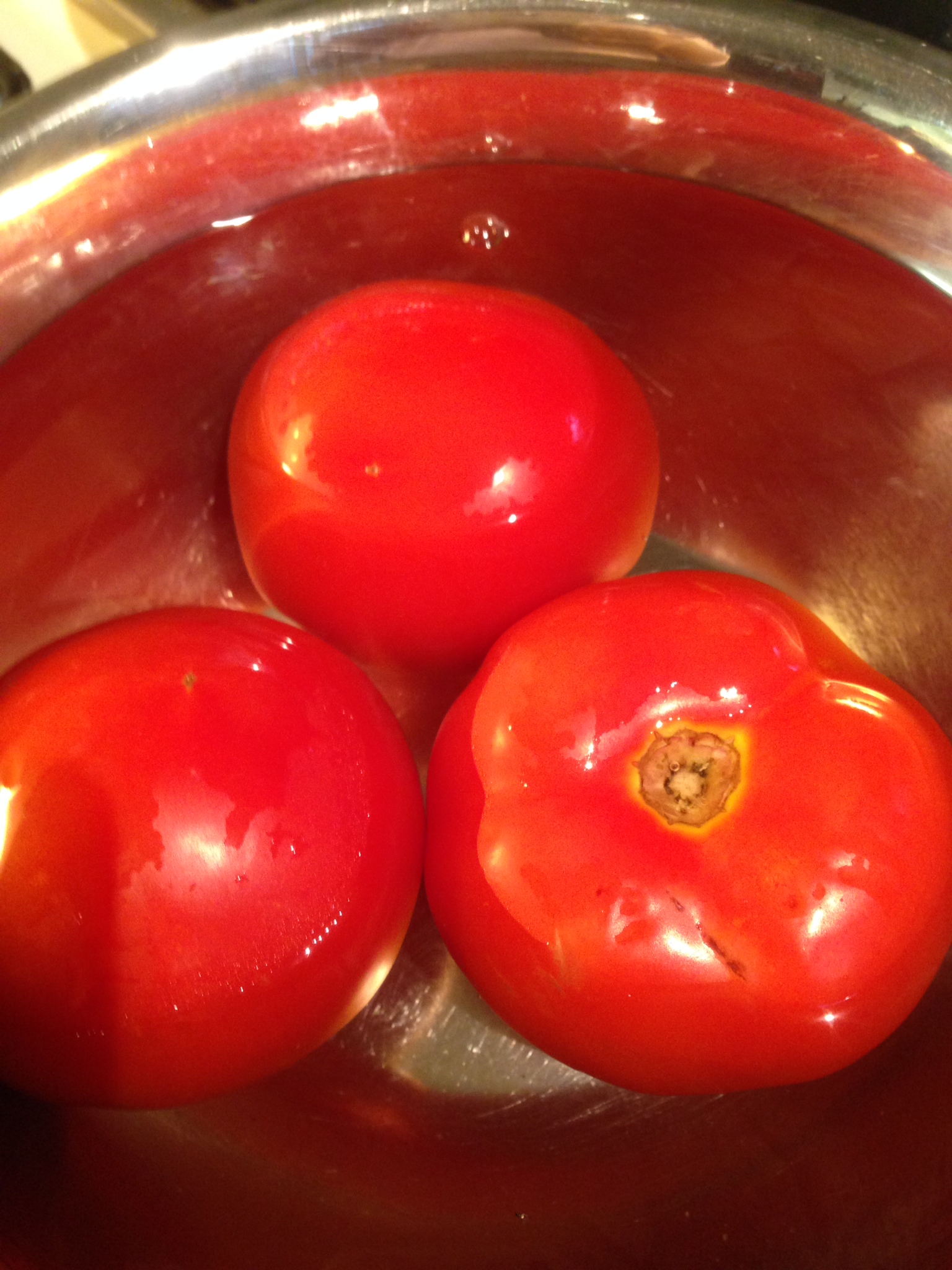
Place tomatoes in bowl of boiling water, then peel off skin, remove seeds and chop

 Soaking tomatoes in hot water makes it easier to peel the skin off
Soaking tomatoes in hot water makes it easier to peel the skin off

Finely chop coriander and mint (save half for garnish)
Finely slice garlic cloves

Sliced garlic, coriander and mint for crazy water

Deseed chillies and dice finely
Put all ingredients, except the fish fillets, into large heavy based saucepan and bring to a boil.

All the ingredients except the fish go into making the crazy water

Lower heat and simmer for 45 minutes with lid on
Remove lid, return mixture to a boil and reduce sauce to half again, but ensuring some of the light broth remains
Add snapper fillets skin side down for 2 minutes, simmering over medium heat
Carefully turn fillets over and cook for a further 5-8 minutes until fish is just cooked through
Serve with finely chopped and blanched spinach or bok choy

Snapper in Indian Crazy Water served with blanched spinach